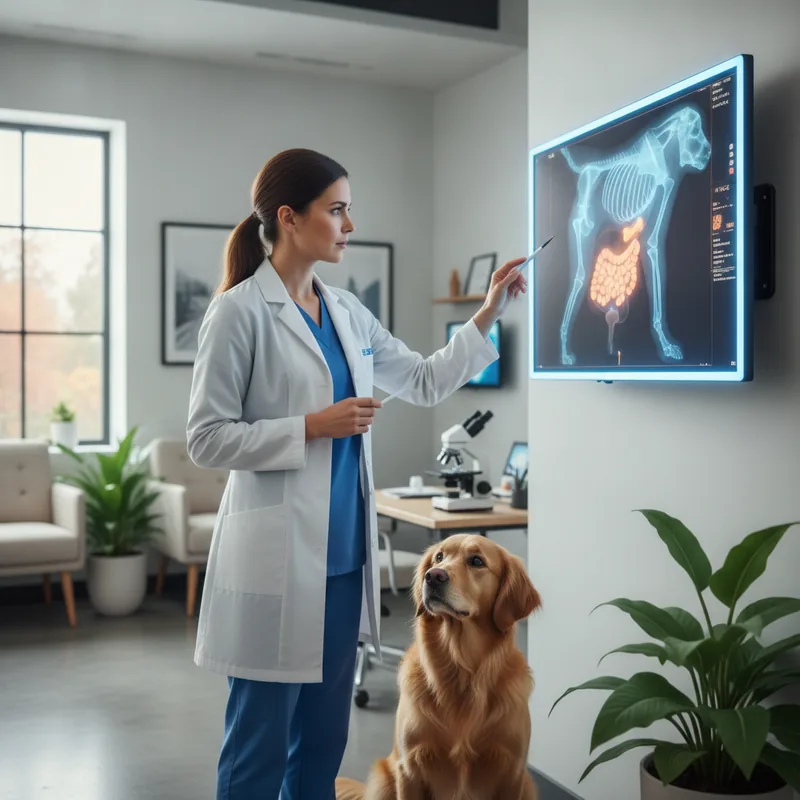
Why Dogs and Cats Are Experts at Hiding Illness
Your pet cannot tell you when something feels wrong, and instinct pushes them to hide it anyway. In the wild, an animal that looks weak becomes a target, so dogs and cats evolved to carry pain and illness quietly. That survival wiring is still fully intact in the pampered pet asleep on your couch. The result is an animal that often acts normal right up until a problem is well established.
Cats are the true masters of this. A cat can lose a meaningful amount of kidney function, drop weight steadily, or live with dental pain for months while still purring and greeting you at the door. By the time the signs are obvious to an owner, the underlying problem has often had a long head start. A thin cat that still eats may already be well into a treatable disease that a simple test would reveal.
This is the whole reason veterinary diagnostics exist. Bloodwork, imaging, and lab tests let us see what your pet is working so hard to conceal. They turn a vague hunch that something is off into real, measurable information we can act on.
Dogs mask trouble too, just in different ways. A dog may keep wagging and eating while an organ slowly struggles, because the drive to please and stay active overrides discomfort. Pet diagnostics in Miami give us an honest look past that brave face, long before a hidden problem forces itself into the open. The goal is never to alarm you, but instead to replace worry with clear facts you and our team can act on.
The Quiet Signals Worth Paying Attention To
Most illnesses do not arrive with drama. They show up as small shifts in habit that are easy to explain away. A dog that drinks a little more water, or a cat that skips a meal here and there, can be easy to dismiss. A pet that sleeps in the back room instead of greeting visitors is sending the same kind of quiet message.
Watch for changes in appetite or thirst, gradual weight loss, repeated vomiting or diarrhea, and new lethargy or hiding. Shifts in urination, whether more frequent, strained, or in odd places, are common red flags. Bad breath, a new limp, a lingering cough, or a change in temperament also deserve attention rather than a wait-and-see approach. Even a pet that seems grumpy or withdrawn may simply be in pain it cannot show any other way.
Context matters as much as the sign itself. A single skipped meal on a hot Miami afternoon is different from three days of a dog turning away from the bowl. Pay attention to how long a change lasts, whether several changes appear together, and whether your pet is young, middle-aged, or a senior.
One quiet sign is rarely a crisis, but a cluster of them, or one that lasts more than a day or two, is a reason to call. We hear from South Miami pet owners who knew something felt different long before a test confirmed it. That owner instinct, paired with the right diagnostics, is a powerful early warning system.
What Veterinary Diagnostics Can Actually Reveal
When your pet shows those subtle signs, the next step is looking beneath the surface. Our digital x-ray, CT, ultrasound, and in-house laboratory let our team examine the body from several angles in a single visit. Each tool answers a different kind of question.
Digital radiography shows bones, the chest, and the general size and shape of organs, which helps with limping, coughing, and swallowed objects. Ultrasound, or sonography, looks inside soft tissue and organs in real time to find fluid, masses, or changes in the bladder, liver, and intestines. An ECG checks the rhythm and electrical activity of the heart when we suspect a cardiac issue. Together these images let us confirm or rule out concerns without guessing at what lies beneath the skin.
Laboratory work rounds out the picture. A blood chemistry panel, complete blood count, and urinalysis flag problems with the kidneys, liver, blood sugar, red and white cells, and more. Because much of this runs on-site, we often have same-day results and can begin a plan while you are still in the building.
These tools work best together rather than alone. An x-ray might show a slightly enlarged organ, bloodwork can suggest why, and ultrasound can confirm what is happening inside it. Combining results this way reduces repeat visits and gives us a far clearer answer than any single test on its own. It also means we can match the depth of testing to your pet, rather than running more than the situation calls for.
The Case for Baseline Bloodwork and Senior Testing
Diagnostics are not only for sick pets. A set of baseline results taken while your animal feels great gives us a personal reference point for the years ahead. When a value shifts later, we can compare it to your pet's own normal instead of a textbook average. Two healthy dogs can have different baseline numbers, so your pet's personal history is genuinely useful information.
This matters most as pets age. Routine screening through our wellness and internal medicine care catches conditions like kidney disease, diabetes, and thyroid imbalance in their early, treatable stages. Early kidney values, for example, can prompt a diet change that adds quiet, comfortable years to a cat's life.
South Florida's year-round warmth adds its own reasons to test. Mosquitoes keep heartworm a constant threat, and the heat makes early kidney and hydration problems easier to miss. Regular screening gives us a seasonal snapshot of how your pet is holding up in this climate. Parasite exposure and humidity both put extra strain on organs that routine lab work keeps an eye on.
We generally recommend yearly bloodwork for adult pets and twice-yearly checks for seniors, since a dog or cat ages far faster than we do. Many Kendall families fold a simple blood panel into the annual exam, and that habit is how slow, silent diseases get caught before symptoms ever appear.
When Results Point Toward Treatment or Surgery
Diagnostics do more than name a problem. They shape the safest path forward and tell us when a condition needs medication, monitoring, or a procedure. A mass seen on ultrasound, a foreign object on an x-ray, or a bladder stone on imaging often leads to a clear treatment decision. Finding these early usually means a smaller, safer intervention than waiting until your pet is visibly suffering.
When the answer is an operation, testing continues to protect your pet. Pre-anesthetic bloodwork before any surgical procedure confirms the kidneys and liver can handle anesthesia and helps us tailor the plan to your individual animal. Skipping that step is a risk we do not take, especially for older pets and those with no recent testing on file.
Diagnostics also tell us when surgery is not the answer. Sometimes imaging rules out a feared problem and points to a simpler fix, like a diet change or a short course of medication. Knowing what is truly going on spares your pet unnecessary procedures and spares you unnecessary worry. A clear answer, in either direction, is always better than a lingering question about your pet's health.
Our records are electronic, so results, images, and history move easily between visits and vets on our team. When a case is complex, we run samples through external reference labs and can consult specialists across the country, so your pet benefits from more than one set of eyes.
Get Your Pet Checked Before a Quiet Sign Becomes Serious
If your dog is drinking more than usual or your cat has started hiding and skipping meals, those small signals are worth a look now rather than later. Our Miami team on US-1 uses digital imaging and a same-day in-house lab to turn uncertainty into answers in a single visit. Early information is what keeps a manageable problem from becoming an emergency, and it often makes treatment simpler and less stressful for your pet.
Call us at (305) 665-9400 to schedule diagnostics, or send us a message online with a question first. We have cared for South Florida pets since 1981, and we are ready to help you understand what your animal cannot say out loud.
Frequently Asked Questions
How do I know if my pet actually needs diagnostic testing?
Trust the pattern more than any single moment. Changes in appetite, thirst, weight, energy, or bathroom habits that last more than a day or two are good reasons to call. Because pets hide illness so well, testing is often the only way to confirm whether a quiet change is harmless or the start of something that needs treatment. When in doubt, a quick call lets us help you decide whether a visit makes sense.
Does my pet need to stay all day, or can I get results quickly?
Much of our testing runs in our in-house laboratory, so we frequently have blood chemistry, complete blood count, and urinalysis results the same day. That means we can often start explaining findings and building a plan during your visit. More specialized samples go to external reference labs, which take a little longer.
Why does Briarwood recommend bloodwork when my pet seems healthy?
Baseline bloodwork on a healthy pet gives us a personal reference point for the future. Comparing later results to your pet's own normal helps us catch kidney disease, diabetes, and thyroid problems early, when they respond best to treatment. It is one of the most valuable parts of a yearly wellness exam.
Is pre-anesthetic bloodwork before surgery really necessary?
Yes. Pre-anesthetic testing checks that the kidneys and liver can safely process anesthesia and helps us adjust the plan for your individual pet. It can reveal hidden issues that change how a procedure is handled, which is why we include it before surgery rather than treating it as optional. The small step adds real peace of mind on the day of the operation.
Keep Reading
More Pet Care Tips
Why Pet Dental Care Matters More Than You Think
Most dogs and cats show signs of dental disease by age three, yet owners rarely notice until it hurts. Here is how good dental care protects your pet's whole body.
Read more →
Fostering Socialization and Play for Pets
Socialization is more than playtime. Done right, it builds a confident, well-adjusted pet. Here is how to foster healthy play and safe introductions in Miami.
Read more →
Tips for Traveling With Your Dog in Florida
Dogs make great travel companions when you plan ahead. From car safety to hotel etiquette and heat protection, here is how to travel well with your dog in Florida.
Read more →
Questions About Your Pet's Health?
Our Miami veterinary team has cared for South Florida pets since 1981. Request an appointment or call us today.