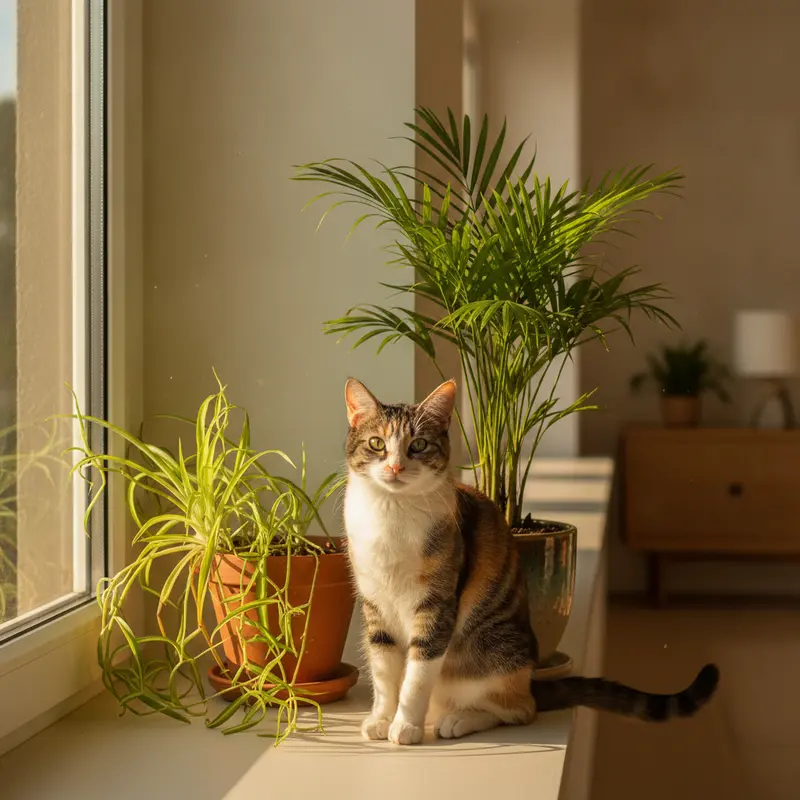
Why Cats and Houseplants Are a Risky Mix
South Florida's climate makes indoor gardening irresistible. Bright, humid Miami homes are perfect for tropical greenery, and many of us fill our windowsills with lush plants year-round. The problem is that cats are natural nibblers.
They chew leaves out of boredom, curiosity, or a craving for fiber, and they cannot tell a harmless herb from a toxic lily. A single bite of the wrong plant can send a cat into kidney failure.
Cats are also uniquely sensitive. Their livers lack certain enzymes that other animals use to break down plant compounds, so substances that barely bother a dog can be deadly for a cat. Before you bring home the next trendy houseplant, it pays to know which greenery is safe and which belongs completely out of reach. When you are unsure whether a plant is a threat, our veterinary medicine team can help you sort it out.
South Florida living blurs the line between indoors and out. Screened patios, lanais, and pool cages let cats lounge among the greenery all year, and many Miami homes have both potted tropicals inside and dense landscaping just beyond the screen. That means a curious cat can reach plants you never thought of as houseplants, from a sago palm in a decorative pot to an oleander hedge visible through the screen. The safest approach treats every plant your cat can touch, inside or on the patio, as part of the same checklist.
The Most Dangerous Plants for Cats
Some plants are so toxic that no cat household should keep them, period. True lilies top the list. Every part of a lily - petals, leaves, pollen, even the water in the vase - can cause fatal kidney failure in cats, and it takes only a tiny amount.
Easter lilies, tiger lilies, daylilies, and Asiatic lilies all belong in this group. If you love fresh flowers, ask your florist to keep lilies out of any arrangement that will enter your home.
Other serious offenders include sago palm, popular in Miami landscaping and sometimes sold as a small indoor specimen, which can cause liver failure. Dieffenbachia, philodendron, pothos, and peace lily contain insoluble calcium oxalate crystals that burn the mouth and throat and cause intense drooling and swelling.
Oleander, azalea, and cyclamen affect the heart and digestive system. Aloe vera, despite its healthy reputation for people, causes vomiting and lethargy in cats. Keep this entire group out of your home, or in a room your cat can never access.
Houseplants That Are Safe for Cats
The good news is that plenty of beautiful plants pose no threat if your cat takes a bite. Spider plants are a classic cat-safe choice, tough and easy to grow in Florida light. Boston ferns, areca and parlor palms, and calathea add rich greenery without the danger. For color, African violets and orchids are non-toxic, and many cats leave orchids alone entirely.
Cat-friendly herbs are a smart way to satisfy the urge to chew. A pot of cat grass, catnip, or valerian gives your cat something safe to nibble and can steer them away from your other plants. Even so, remember that too much of any plant material can upset a cat's stomach and cause vomiting, so safe does not mean unlimited. If your cat is chewing plants constantly, it can signal boredom or a dietary gap worth raising at a wellness visit.
Two more popular picks are worth calling out because they are frequently confused with toxic look-alikes. The parlor palm and areca palm are genuinely cat-safe. The sago palm, despite the name, is not a true palm at all and is extremely toxic, so read the plant tag carefully when you shop.
Likewise, a true Boston fern is fine, while the unrelated asparagus fern can irritate a cat's skin and stomach. When a nursery label is vague or missing, snap a photo and look the plant up before it goes on your windowsill.
Smart Placement and Deterrents
Even safe plants do better out of a determined cat's reach, and the toxic ones simply cannot be an option. Hanging baskets, high shelves, and rooms you keep closed are your best tools. Remember that cats climb, so a plant on a bookshelf is not automatically safe. Test whether your cat can reach it before you trust the spot.
Cats dislike certain textures and smells, and you can use that. A layer of large pebbles or aluminum foil over the soil discourages digging and chewing. A light citrus scent near a plant often keeps curious noses away, since most cats find citrus unpleasant.
Giving your cat plenty of enrichment - window perches, toys, and scratching posts - reduces the boredom that drives plant-chewing in the first place. If a new plant coincides with a change in your cat's appetite or energy, our veterinary diagnostic testing can rule out a toxic exposure quickly.
Cut flowers deserve their own rule, because a gift bouquet can undo all your careful plant shopping in one afternoon. Bouquets from a grocery store or florist frequently include lilies, and a cat that brushes past the arrangement and later grooms pollen off its fur can be poisoned without ever taking a bite. When flowers arrive, sort through them before you set the vase down, pull out any lilies entirely, and keep every arrangement on a high surface or in a room your cat cannot enter. If you are not sure what a stem is, treat it as suspect until you can identify it.
What to Do If Your Cat Eats a Toxic Plant
Speed matters. If you catch your cat chewing on a plant you suspect is toxic, do not wait for symptoms to appear. Take a photo of the plant or bring a leaf with you, note roughly how much your cat may have eaten and when, and call your veterinarian right away. With lilies especially, treatment within the first few hours dramatically improves the odds, while a delay can mean irreversible kidney damage.
Do not try to make your cat vomit at home unless a veterinarian specifically tells you to, since the wrong method can cause more harm. Watch for drooling, pawing at the mouth, vomiting, diarrhea, lethargy, loss of appetite, tremors, or difficulty breathing, and treat any of these as an emergency. It also helps to keep the number for the ASPCA Animal Poison Control Center saved alongside ours, so you can get guidance while you head in for care.
Timing is everything with the worst offenders. Lily poisoning follows a cruel pattern in cats. Vomiting and drooling come in the first few hours, then a deceptive period where the cat seems to recover, and then kidney failure a day or two later once the damage is done. Because the early window is when treatment works best, never wait to see whether your cat improves on its own.
Because toxic foods carry the same urgency as toxic plants, it is worth reading up on holiday foods to avoid feeding your pet so your whole household stays prepared.
Keeping a Cat-Safe Home in Miami
Building a home that works for both your cat and your love of plants comes down to a simple habit: check before you buy. Keep a running list on your phone of the plants that are toxic to cats, and confirm any new addition against it, including cut-flower arrangements and gift bouquets. It takes thirty seconds and can prevent a devastating mistake.
It also helps to do a quick sweep of your home from your cat's point of view, low to the ground and up along the climbing routes it actually uses. Cat-proofing is part of the same routine care that keeps indoor cats thriving in our climate - year-round parasite prevention, wellness exams, and a diet suited to your cat's age and health. Miami cat owners from Coral Gables pet care to Kendall veterinary services lean on that mix of prevention and quick response to keep curious cats out of trouble all year long.
Frequently Asked Questions
Are all lilies dangerous to cats?
True lilies - Easter, tiger, daylily, and Asiatic varieties - are among the most dangerous plants for cats, and even the pollen or vase water can cause fatal kidney failure. Some plants called lilies, like peace lily and calla lily, are less deadly but still cause painful mouth irritation. The safest rule is to keep all lilies out of a cat household.
My cat ate a leaf but seems fine. Should I still worry?
It depends entirely on the plant. If it was a cat-safe plant like a spider plant, mild stomach upset is the worst you will likely see. If it was a lily, sago palm, or another highly toxic plant, symptoms can be delayed while serious damage is already happening. When in doubt, call us and describe the plant rather than waiting.
What should I do right away if my cat is poisoned by a plant?
Bring a sample or photo of the plant, note how much and when your cat ate it, and get help immediately. Do not induce vomiting unless a veterinarian directs you to. For a suspected toxic exposure, call (305) 665-9400 and come in for emergency veterinary care. Fast treatment makes the biggest difference.
How can I stop my cat from chewing on plants?
Offer a safe alternative like cat grass or catnip, place other plants out of reach on hanging hooks or in closed rooms, and use deterrents such as citrus scent or foil over the soil. More play and enrichment also cuts down the boredom-driven chewing that leads cats to your greenery.
Keep Reading
More Pet Care Tips

Fostering Socialization and Play for Pets
Socialization is more than playtime. Done right, it builds a confident, well-adjusted pet. Here is how to foster healthy play and safe introductions in Miami.
Read more →
Tips for Traveling With Your Dog in Florida
Dogs make great travel companions when you plan ahead. From car safety to hotel etiquette and heat protection, here is how to travel well with your dog in Florida.
Read more →
Holiday Foods to Avoid Feeding Your Pet
From chocolate and grapes to the turkey bones in the trash, holiday gatherings are full of hazards for pets. Learn what to avoid and how to keep the season safe.
Read more →
Questions About Your Pet's Health?
Our Miami veterinary team has cared for South Florida pets since 1981. Request an appointment or call us today.